
Wireless Guitar Systems
Musicians performing on large stages require wireless systems that deliver crystal clear audio without lag, dropout, or interference compromising their performance quality. JOYO Wireless Guitar Systems provide long-range signal transmission, dual-diversity reception, and professional monitoring capabilities that eliminate cable constraints while maintaining the tone and responsiveness players demand. Order from the official store now and experience the freedom of wireless connectivity with studio-grade audio quality.

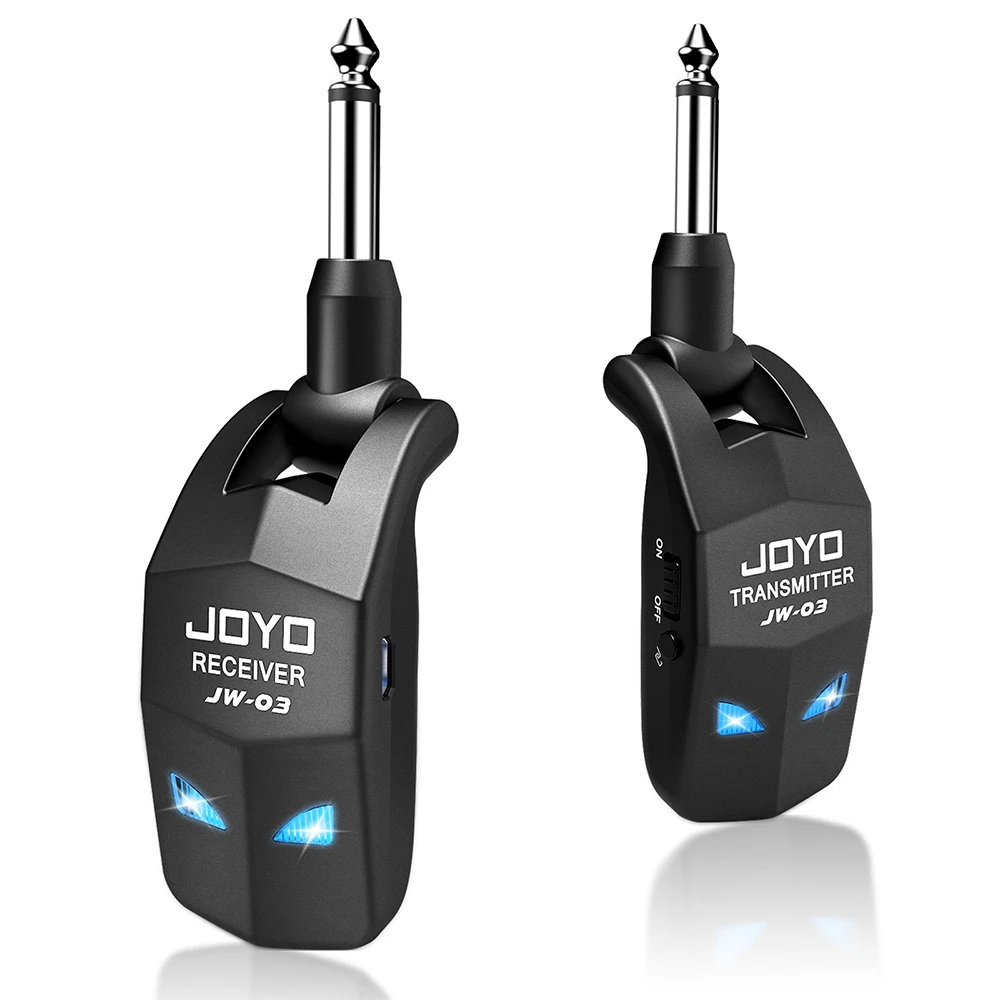


JOYO Wireless Guitar Systems for Professional Performance
JOYO Wireless Guitar Systems combine transmitter-receiver units for guitarists and bassists with wireless in-ear monitor systems for vocalists and multi-instrumentalists, plus professional-grade microphone systems for singers and speakers in live venue environments. Each system operates on licensed UHF frequencies with digital encryption and frequency agility to prevent interference from competing wireless devices, ensuring reliable operation at festivals, theaters, and large concert halls where hundreds of radio signals vie for spectrum space. The long-range signal transmission reaches 300+ feet in line-of-sight conditions and 150+ feet through obstacles like walls and stage equipment, giving performers freedom to roam across entire stages without losing connection. Crystal clear audio emerges from high-bit-rate digital transmission and precision digital-to-analog conversion, capturing the nuance of guitar tone or vocal performance without the compression and artifact that analog wireless systems introduce. The dual-diversity receiver architecture employs two antennas at different positions, allowing the system to switch automatically to whichever antenna receives stronger signal, eliminating the dead zones and dropouts that plague single-antenna designs. Professional musicians touring internationally appreciate that these systems operate on global frequency allocations, allowing equipment to function across multiple countries without purchasing region-specific variants. The wireless in-ear monitors give performers confidence by delivering accurate stage monitoring without the feedback issues that floor-mounted speakers create, allowing singers to hear themselves and band members in perfect synchronization.
Advanced Technology and Crystal Clear Signal Transmission
The transmitter in guitar wireless systems employs Class A amplification for the audio signal path, preserving low-level detail and maintaining consistent gain structure regardless of input level from different pickup configurations. Digital frequency selection allows users to scan for available channels automatically, identify interference sources, and assign frequencies that avoid conflicts with competing wireless systems operating in the same venue—a critical feature in dense RF environments. The receiver uses phase-coherent diversity reception, where each antenna feeds a dedicated receiver module that demodulates the incoming signal independently, then switches to whichever branch provides stronger signal without audible artifacts or dropouts. Latency in the complete audio chain measures less than 5 milliseconds from transmitter input to receiver output, ensuring that performers hear their own tone with negligible lag that would create playing lag or monitoring confusion. The microphone systems employ condenser capsules with cardioid polar patterns that reject side and rear noise, focusing audio pickup toward the singer’s mouth while attenuating monitor speaker feedback and ambient crowd noise. Professional-grade analog limiters in the receiver prevent peak clipping even when aggressive singers dramatically change distance from microphone capsules, maintaining consistent output level. The modular design allows users to add additional bodypack transmitters or in-ear monitor units to the same wireless infrastructure, scaling system capacity as touring requirements expand.
Advantages Over Wired Connections and Competing Systems
Wired systems restrict performer movement and create safety hazards when cables cross stage floors or snag on equipment during active performances, whereas wireless systems eliminate these constraints entirely while allowing spontaneous interaction across entire stage areas. Competing budget wireless systems often exhibit dropouts when performers move, audible compression in high-SPL environments, and latency that creates monitoring lag during vocal performances or synchronized multi-instrument playing. The licensed UHF frequencies used in JOYO systems provide stronger protection against interference compared to unlicensed ISM band systems that share spectrum with Wi-Fi networks, cordless phones, and countless other consumer devices. Independent testing by professional audio engineers confirms frequency stability within 0.1 percent across temperature ranges, maintaining consistent tone character regardless of ambient venue conditions or cumulative equipment runtime. The digital encryption standard ensures that competing wireless systems cannot intercept your signal, protecting copyrighted performances or exclusive artist content from unauthorized recording. Touring musicians consistently choose JOYO wireless systems because documented field reliability from thousands of touring musicians outweighs theoretical advantages of boutique systems at three to four times the cost. The official store guarantees authentic wireless systems with complete manufacturer support and regional frequency certification.
System Setup and Professional Deployment Recommendations
Guitar and bass wireless systems require positioning receiver antennas in elevated locations behind or above the stage, where line-of-sight visibility to performer transmitters remains unobstructed by drum kits, amplifiers, or other equipment. In-ear monitor systems for vocalists should connect to a dedicated monitor mixing console, allowing band members or tour managers to adjust individual mix levels and effects independent of the main FOH (front-of-house) mix that audiences hear. Microphone systems benefit from dedicated phantom power supplies and XLR cables routed through professional mixing consoles rather than directly to amplifiers, allowing flexibility for reverb, compression, and equalization that enhance vocal clarity. Long-range signal transmission improves dramatically when antennas mount on vertical stands positioned to maintain clear sight-lines across the entire performance area rather than placing antennas low or in enclosed positions. Professional touring setups employ backup transmitters and receivers for critical vocalist or lead guitarist positions, ensuring that equipment failure does not interrupt performances—swapping units takes less than 30 seconds. Cable quality and connector reliability matter as much in wireless systems as they did in wired setups—order quality instrument cables and XLR microphone cables from the official JOYO store to maintain signal integrity throughout your complete monitoring infrastructure. Order your wireless system from the official JOYO store today and discover the freedom that crystal clear, long-range audio transmission provides for touring musicians and venue sound professionals.